Boskalis proposes to implement best-practice environmental protection measures to further prevent and mitigate potential environmental impacts from the proposed sand-sourcing operation. These measures will be included in the proposed Environmental Management Plan (EMP) for the project. The environmental protection measures are based on relevant State and Commonwealth guidelines and long-proven, internationally-accepted measures that have been applied to dredging projects globally. The proposed measures include, but are not restricted to, the following:
Marine fauna (including dolphins & turtles):
- The likelihood of potential impacts on marine fauna will be reduced by the very slow speed of the Sand Production Vessel (SPV) when operating in Cambridge Gulf (~2 knots), and the very low presence of the SPV in Cambridge Gulf (only one- to two-days every two weeks).
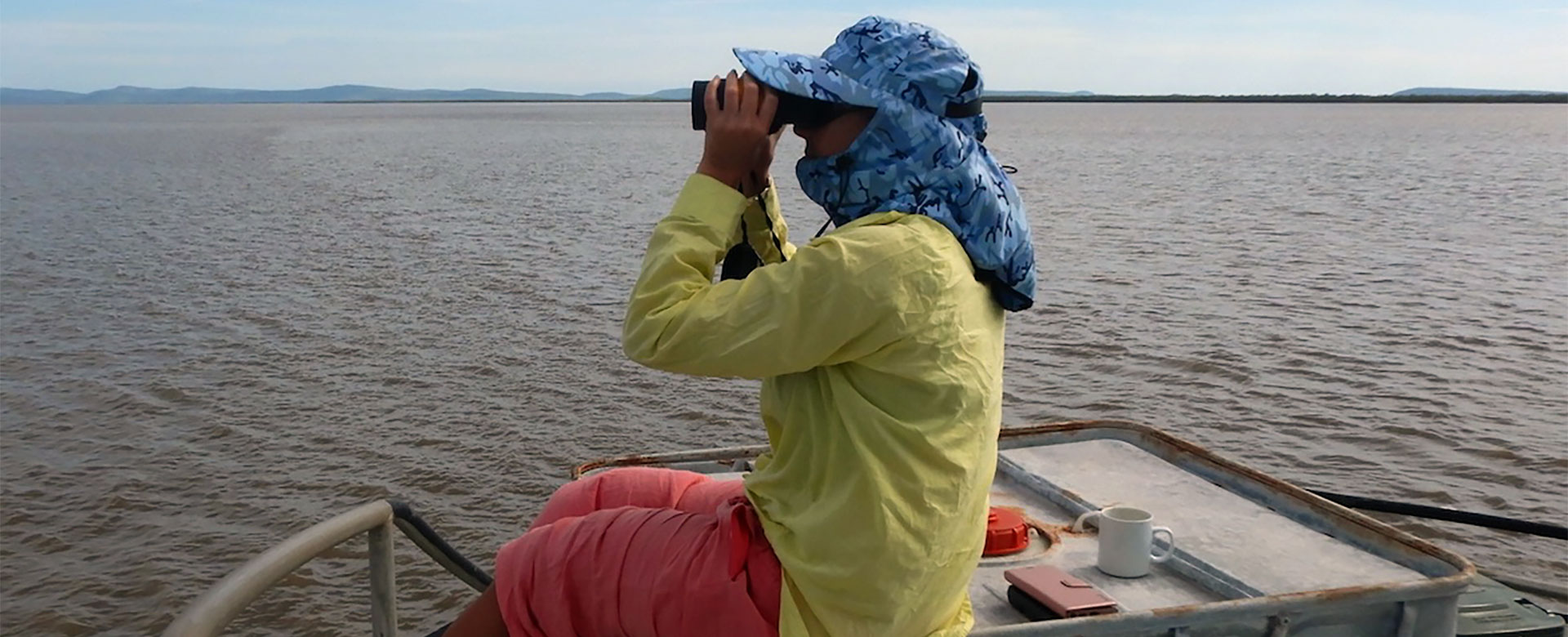
- Potential vessel strikes on marine fauna by the SPV will be prevented and mitigated through implementation of a Marine Fauna Observation & Avoidance (MFOA) program, with dedicated Marine Fauna Observers, supported by aerial drone, with defined observation and exclusion zones.
- Potential entrainment of marine fauna in the SPV’s drag-head will be prevented and mitigated through implementation of a soft-start procedure, and fitting fauna-excluder chains (‘ticklers’) in front of the drag-head.
- The SPV will be permanently fitted with turtle-safe lighting to prevent potential light impacts on marine turtles.
- During the peak turtle nesting season (August-September) the SPV’s operations will be restricted to the western part of the proposed operational area (POA), which is furthest from the main turtle nesting beach on the seaward side of Cape Domett.
- Potential impacts of underwater noise emissions from the SPV on dolphins and turtles were assessed in accordance with WA-EPA requirements, and the SPV will apply noise reduction measures in accordance with the International Maritime Organization (IMO) underwater noise guidelines.
- Boskalis also proposes to support research and monitoring of key marine fauna species, to improve biodiversity conservation in the area, in cooperation with relevant stakeholders including TOs.
Turtle nesting beaches:
- There will not be any direct impacts on turtle nesting beaches as the proposal does not involve any facilities, infrastructure, activities or operations in coastal areas.
- A detailed assessment of potential indirect impacts on turtle nesting beaches, from potential changes to sediment dynamics as a result of the proposed sand-sourcing, is presented in Referral Report No. 8 – Full Modelling Report, and finds that potential impacts are negligible.
- As a precautionary measure, the proposed EMP for the project includes:
- Monitoring potential changes to turtle nesting beaches, with response actions should unacceptable changes be detected, including, if necessary, cessation of operations and implementation of restoration actions.
- Repeating the modelling assessment, with updated field data, after the first five-years of operation, with response actions should unacceptable changes be detected, including, if necessary, cessation of operations and implementation of restoration actions.
- Additional independent, external, expert review and auditing processes, throughout the project life-span.
Mangroves (including in the Ord River Floodplain Ramsar wetland):
- There will not be any direct impacts on mangroves (including the Ramsar wetland), as the proposal does not involve any facilities, infrastructure, activities or operations in coastal areas.
- A detailed assessment of potential indirect impacts on mangroves (including the Ramsar wetland), from potential changes to sediment dynamics as a result of the proposed sand-sourcing, is presented in Referral Report No. 8 – Full Modelling Report, and finds that potential impacts are negligible.
- As a precautionary measure, the proposed EMP for the project includes:
- Monitoring potential changes to mangroves (including the Ramsar wetland), with response actions should unacceptable changes be detected, including, if necessary, cessation of operations and implementation of restoration actions.
- Repeating the modelling assessment, with updated field data, after the first five-years of operation, with response actions should unacceptable changes be detected, including, if necessary, cessation of operations and implementation of restoration actions.
- Additional independent, external, expert review and auditing processes, throughout the project life-span.
Marine environmental quality (MEQ):
- The sand-sourcing will be a purely mechanical / hydraulic operation and does not involve the use or discharge of chemicals or pollutants.
- There will be zero bunkering (refueling) of the SPV in Australian waters. All bunkering of the SPV will be undertaken at the Asian sand-delivery port under controlled port conditions.
- The SPV will not discharge garbage when in Australian waters or place any garbage ashore in the Port of Wyndham or any other Australian port. All garbage will be kept on-board and managed in accordance with Annex V of the MARPOL Convention, and discharged to approved port waste reception facilities at the sand destination port in Asia.
- The SPV will not discharge sewage when in Australian waters (it will be kept on-board in holding tanks), and will comply with the requirements of Annex IV of the MARPOL Convention for on-board sewage treatment systems.
- The SPV will be subject to the:
- WA Pollution of Waters by Oil & Noxious Substances Act; and
- Commonwealth Protection of the Sea (Prevention of Pollution from Ships) Act.
- As presented in Referral Report No. 8 – Full Modelling Report, detailed modelling was undertaken of potential changes to suspended sediments and turbidity, and these are negligible relative to the extremely high, natural suspended sediments and turbidity in Cambridge Gulf. That assessment is supported by a comprehensive data collection program and subject to two independent, external expert reviews.
Marine biosecurity:
- The SPV will be equipped with an IMO-compliant ballast water treatment system as required by the Commonwealth Biosecurity Act.
- The SPV will implement a biofouling management plan with stringent biofouling prevention, management, mitigation and monitoring measures, consistent with the IMO biofouling guidelines and as required by the Commonwealth Biosecurity Act. Biofouling management measures will include:
- Maintenance of a high-grade, IMO-compliant anti-fouling system on the SPV.
- Regular in-water inspections and when necessary, in-water hull cleaning in Singapore – with a priority focus on niche areas.
- Periodic dry docking, out-of-water hull cleaning and refresh of anti-fouling system per overall ship maintenance schedule.
- Required reporting to Australian authorities as per Commonwealth Biosecurity Act requirements.
Air quality:
- The SPV will comply with Annex VI of the MARPOL Convention and AMSA Marine Order 97 under the Commonwealth Protection of the Sea (Prevention of Pollution from Ships) Act, which control air emissions from ships.