
Project Description
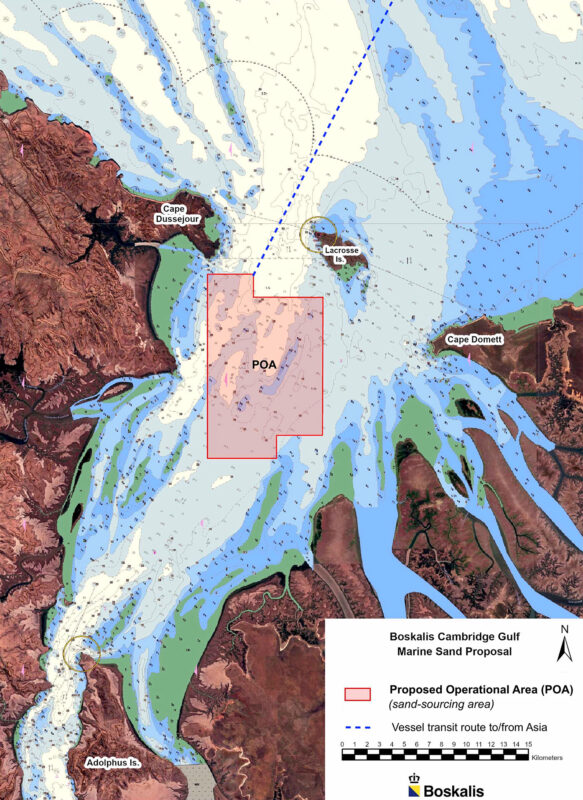
Boskalis Australia is assessing the feasibility of developing a marine sand-sourcing operation in Cambridge Gulf near Wyndham in the northeast of Western Australia. The sand in Cambridge Gulf is derived from natural land-based sources via river inputs. The sand would be exported to Asian markets for use in construction projects. Key facts relating to the proposal are outlined below.
Zero infrastructure:
The proposal does not involve the construction and operation of any marine or shore-based infrastructure and does not involve the alteration of the coastline in any way. It will be a 100% vessel-based operation.
Marine area:
The proposed operational area (POA) is located in the central part of the main body of Cambridge Gulf where there is a significant seabed sand resource, covering an area of ~100 km2. Water depths within the area average -25 m MSL. The seabed within and around the POA comprises highly-dynamic sand-waves, with very little biota and no significant benthic communities, due to the constantly moving substrate, strong tidal currents (>2 m/s), constantly high suspended sediments and permanent lack of benthic light (see Referral Report No. 2 – Setting & Existing Environment).
Single vessel:
The proposed operation will involve a Sand Production Vessel (SPV), based generally on the design of a large Trailing Suction Hopper Dredger (TSHD). It will be an internationally-registered vessel subject to all relevant regulatory requirements of the International Maritime Organization (IMO) and the Australian Maritime Safety Authority (AMSA). While design is conceptual, indicative specifications are Length Overall of ~350 m, draft of ~19 m, sand capacity of 75K m3 to 135K m3 and crew of ~25. There will be no refuelling or waste discharges in Cambridge Gulf. The operational cycle of a typical TSHD is shown in this video.
Zero activity in Cambridge Gulf for 86% of time:
The SPV will self-load sand in Cambridge Gulf for one to two days every two weeks. It will then sail to the sand delivery port in Asia and return to Cambridge Gulf two weeks later to repeat the cycle. This means that the SPV will only operate in Cambridge Gulf for 52 days per year, or 14% of the time. There will be zero operational activity in Cambridge Gulf for 86% of the time during the project’s lifespan of up to 15 years.
Project lifespan:
The overall project life-span will be up to 15 years from commencement of operations. However, because the SPV will not be present in Cambridge Gulf for 86% of the time during the project life-span, the actual total time-period when the SPV will be operating in Cambridge Gulf is only 2.1 years, spread over 15 years – allowing significant time for natural recovery processes during the 15-year time-frame.
Low footprint each loading cycle:
During each one- to two-day sand loading cycle, the SPV will work over an area of ~0.5 km2 within the POA, with a drag-head width of 6 m. The SPV will remove a layer of approximately 40 cm of sand from the seabed during each loading cycle.
End of project seabed condition:
At the end of the 15-year project timeframe, if the proposed 70 million m3 of sand is exported, the area within the POA will be on average <1m deeper than the pre-project seabed. It will still comprise sand, with similar seabed morphology, dynamics and habitat features as before sand sourcing.
Sand volumes:
Exploration surveys indicate that there is a minimum of 300 million m3 of sand in the POA and likely several times more. There are several orders of magnitude higher volumes of sand throughout Cambridge Gulf overall. The seabed sand comprises large dunes with highly-dynamic sand waves, with vertical heights ranging from 1 to 8 m and horizontal wavelengths of between 50 and 200 m. Repeat hydrographic surveys measured horizontal migration of the sand waves over distances of up to 10 m in just 27-days over a lunar tidal cycle. It is proposed to export up to 70 million m3 of sand. This is a maximum of only 23% of the minimum volume of 300 million m3 of sand estimated to occur in the POA, and a much smaller % of the volume of sand that occurs throughout Cambridge Gulf overall. A minimum of 230 million m3 or 77% of the minimum existing sand resource in the POA will be left in the POA, and likely more.
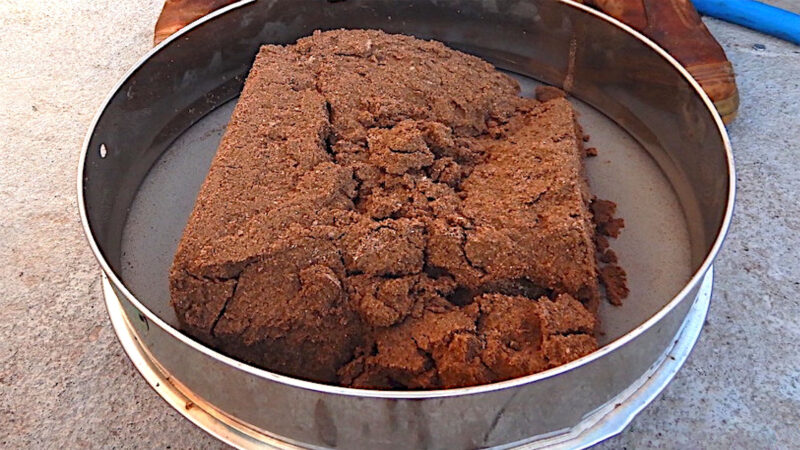
Example of the seabed sand found in Cambridge Gulf.
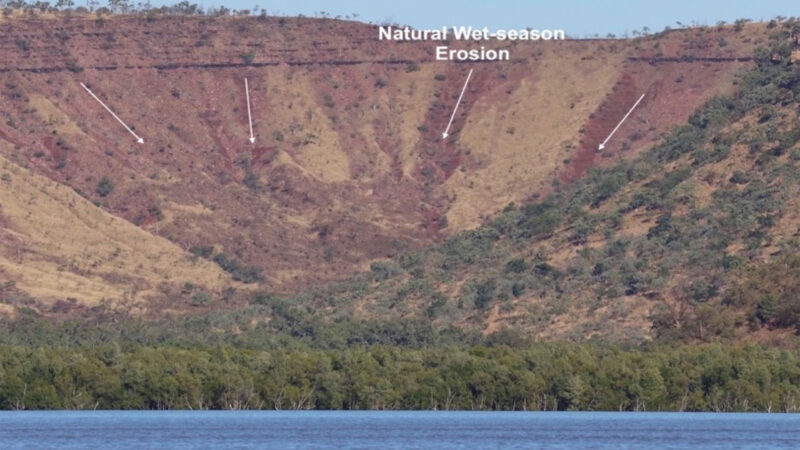
The marine sand in Cambridge Gulf is derived from natural erosion and runoff from the sandstone cliffs and rocky hills in the surrounding catchments.
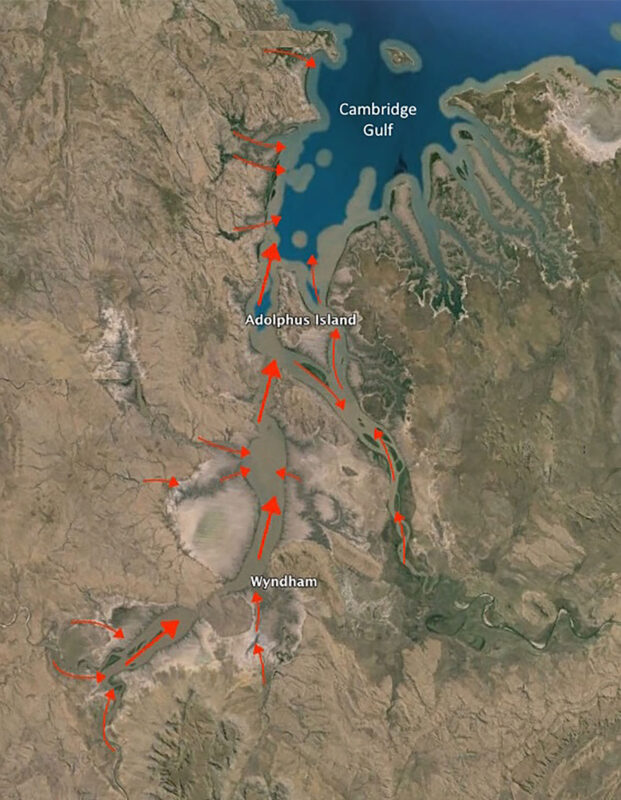
Indicative sand-supply routes from erosion in the surrounding catchments into Cambridge Gulf.
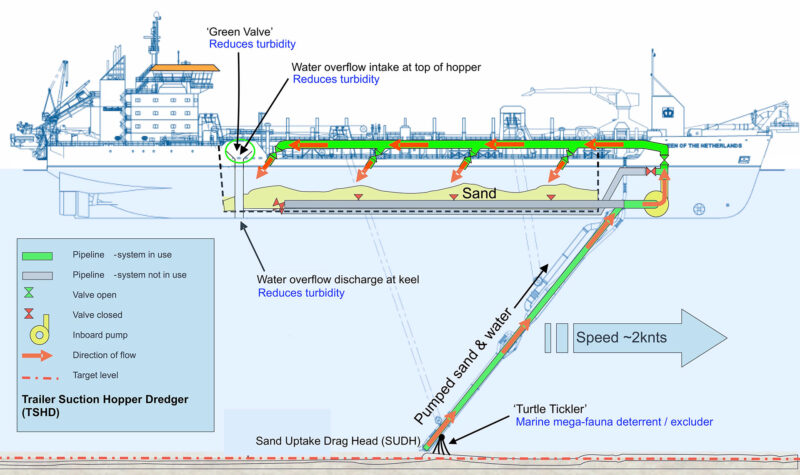
The proposed operation will involve a single Sand Production Vessel (SPV), based generally on the design of a large Trailing Suction Hopper Dredger (TSHD).