Why Cambridge Gulf?
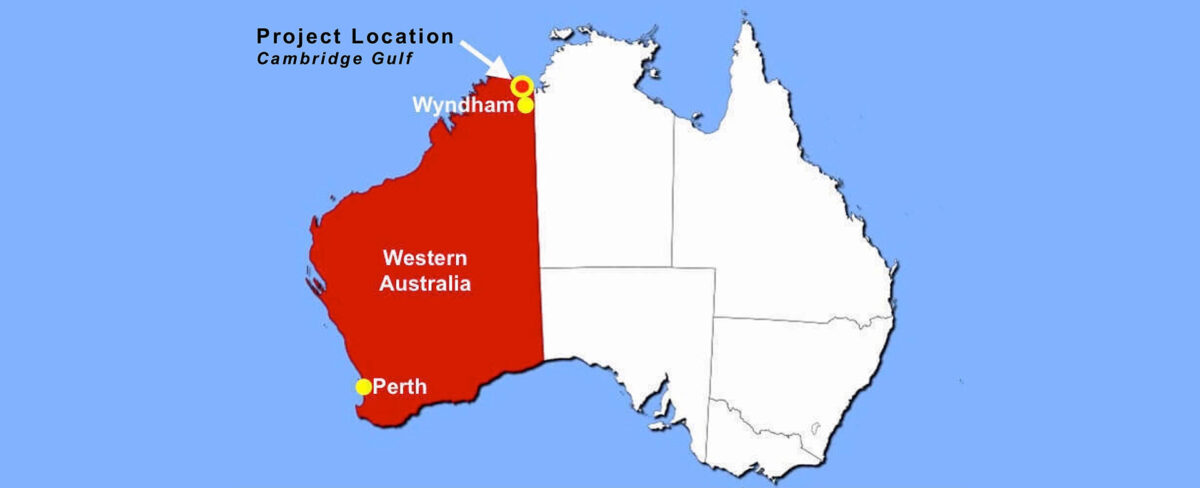
In order to meet the market for marine sand, Boskalis undertook a screening of potential sand-sourcing sites across northern Australia. The assessment considered the sand resource present in different areas, the environmental values and sensitivities, the relative environmental and social risks, and the operational feasibility and economic viability of each area. Please see Section 18 – Assessment of Alternatives, of Referral Report No. 4 – Impact Assessments.
Sites at Admiralty Bay, Vansittart Bay, Napier Broome Bay and Unsurveyed Bay to the west of Cambridge Gulf, which are likely to have significant sand resources, were screened out as they have much more significant environmental values, including coral and seagrass communities, which are not present in Cambridge Gulf.
Several sites offshore from Cambridge Gulf were assessed, including in Joseph Bonaparte Gulf, but these were screened out as they are within the Commonwealth Marine Park. While sand sourcing can be permitted in the Marine Park, subject to assessment and conditions, as an environmentally responsible company, Boskalis prefers not to seek to undertake developments in protected areas, when alternatives exist.
Two areas immediately offshore from Cambridge Gulf were also assessed – King Shoals and Medusa Banks. Both of these areas contain sand resources that are likely to be orders of magnitude greater than within Cambridge Gulf. However, they were screened out as they are both within the State North Kimberley Marine Park, and the Medusa Banks are located immediately offshore from the Cape Domett turtle nesting beach, and protecting that beach is an extremely high priority for Boskalis.
The screening process therefore arrived at the Proposed Operational Area (POA) within Cambridge Gulf (Block 4A and the western part of Block 4 on the map below). Benefits of this site include:
- There is a very significant sand resource with ongoing natural inputs from the catchment.
- There is an existing operational port at Wyndham with commercial shipping traffic through CG, whereas alternatives are ‘greenfield’ sites with no existing operational activity.
- There is very low potential for impacts on other uses and users of the area, as there is very limited use of CG by other marine users.
- The area is highly dynamic with strong tidal currents (>2 m/s), a constantly moving seabed, a permanently dark suspension layer at the seabed, and extremely high natural suspended sediment and turbidity levels.
- Due to the extreme environmental conditions the area does not host sensitive benthic ecological communities including coral reefs, seagrass beds, sponge beds, macroalgae communities etc, so there is no potential to impact on such communities.
Overall, the proposed site in Cambridge Gulf is the better option over the assessed alternatives in terms of net environmental outcomes.
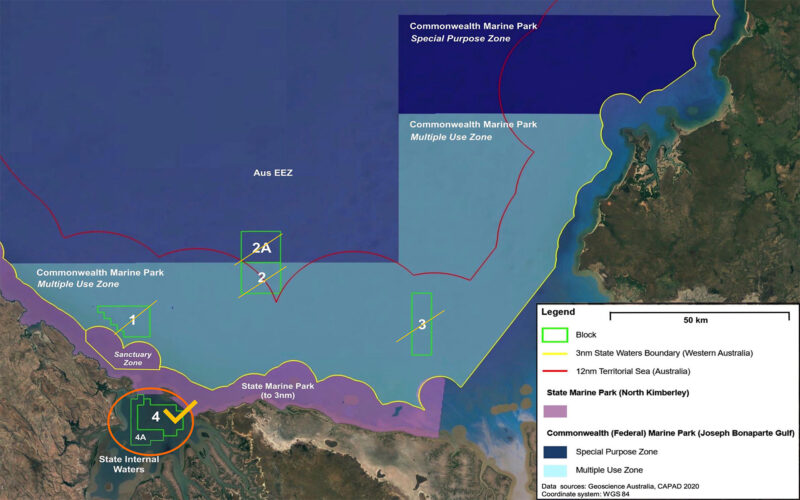
Screening of potential alternative sites offshore from Cambridge Gulf.
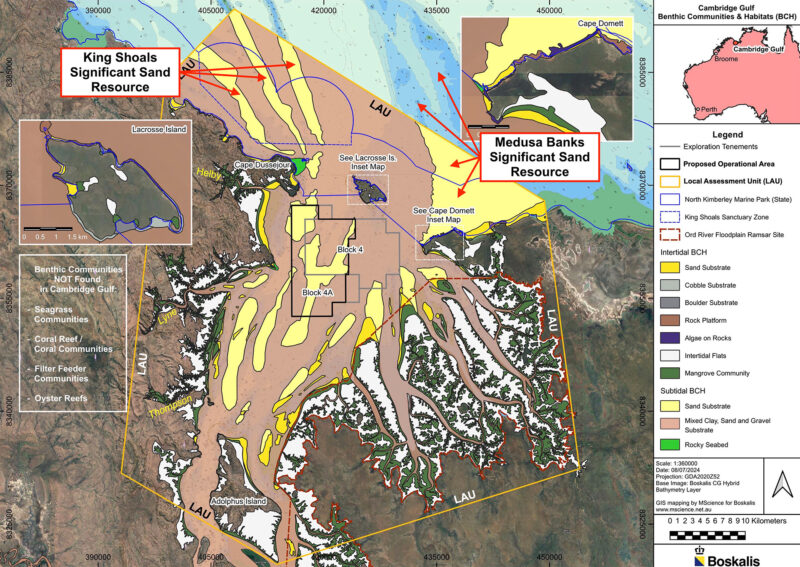
Two potential alternative sand sources in the immediate vicinity of Cambridge Gulf – King Shoals to the west and Medusa Banks to the east. Both sites were screened out for environmental reasons.